
Translational and Digital Precision Arrhythmology
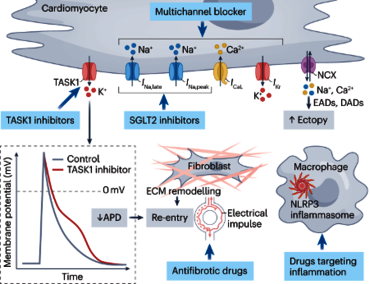
The Translational and Digital Precision Arrhythmology Research Group (Wiedmann Group) aims to gain a deeper understanding of the mechanistic basis of atrial and ventricular cardiomyopathies through an integrated systems approach combining clinical data analysis, cellular electrophysiology, multi-omics profiling, large animal models, and computational modeling. The overarching goal is to define the mechanisms contributing to cardiac dysfunction, arrhythmogenesis, and cerebral impairment, and to translate these findings into precision medicine therapies, device-based interventions, and clinically applicable biomarkers.
At the core of the research program is atrial cardiomyopathy, which is considered not only a substrate for atrial fibrillation and heart failure with preserved ejection fraction (HFpEF), but also a relevant factor in cognitive decline. The underlying disease mechanisms are investigated across multiple biological levels: from ion channel remodeling, transcription factor dysregulation, epigenetic regulation, impaired mechano-electrical coupling, and fibrotic remodeling to alterations in cerebral perfusion, metabolic signaling, and neuroinflammatory processes. The experimental foundation includes clinical datasets, human atrial tissue, induced pluripotent stem cell-derived (iPSC-derived) cardiomyocytes, and clinically relevant porcine models, providing a robust translational platform.
A distinctive feature of the laboratory is the integration of computational and experimental cardiology. Machine learning methods, artificial intelligence (AI) models, and digital twin technologies are used for ECG- and echocardiography-based predictions, mechanistic patient phenotyping, and risk stratification. High-dimensional data from single-nucleus RNA sequencing, proteomics, and automated patch-clamp electrophysiology are processed using systems biology analysis pipelines for network analysis, in silico drug screening, and target validation. These tools accelerate hypothesis generation and enable the reverse translation of clinical observations into mechanistic models.
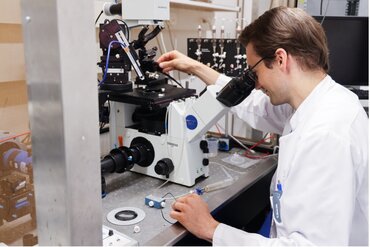
For direct clinical translation, the laboratory operates a specialized large animal electrophysiology program. In models of burst pacing-induced atrial fibrillation and pTAC-based HFpEF porcine models (percutaneous, stent-based), gene therapies, pacemaker algorithms, and antiarrhythmic compounds are evaluated using state-of-the-art interventional imaging and high-density electroanatomical mapping technologies. These models also serve to investigate cardio-neuronal coupling in vivo and enable the analysis of how atrial dysfunction and reduced cardiac output affect cerebral perfusion, neuronal activity, and functional brain connectivity.
These experimental models are embedded in a translational pipeline supported by the local German Centre for Cardiovascular Research (DZHK) infrastructure, enabling the rapid translation of mechanistic findings into clinical applications. Mechanistic observations can be retrospectively validated in patient cohorts and subsequently translated into early prospective clinical trials. Advanced neuroimaging techniques, including functional magnetic resonance imaging (fMRI), as available at the HBCG, will be used to analyze cardio-neuronal signaling pathways in vivo and further elucidate the relationship between cardiovascular diseases and brain dysfunction.
A central translational objective is the development of digital biomarkers to improve risk prediction, patient selection, and treatment optimization. To this end, AI-based ECG analyses, circulating RNA markers, and electrophysiological mapping signatures are integrated to generate predictive models for risk stratification, the likelihood of arrhythmia recurrence, disease progression, and treatment response.
This systemic perspective reflects the laboratory's central hypothesis: Cardiac arrhythmias arise from the interplay of molecular, metabolic, structural, and neuronal factors.
By combining mechanistic discovery with computational prediction and translational validation, the laboratory aims to establish a new paradigm in systems cardiology: mechanistically precise, digitally integrated, and clinically applicable. The long-term vision is to develop personalized therapies that prevent the progression of atrial fibrillation, reverse cardiac remodeling, and preserve cognitive function in patients with cardiomyopathies.
Team
Kontaktinformationen
- Telefon: +49 551 3968880
- E-Mail-Adresse: felix.wiedmann(at)med.uni-goettingen.de
Facharzt für Innere Medizin und Kardiologie
Zusatzqualifikation Spezielle Rhythmologie (Invasive Elektrophysiologie und Aktive Herzrhythmusimplantate)FESC (Fellow of the ESC)
FEHRA (Fellow of the European Heart Rhythm Association)